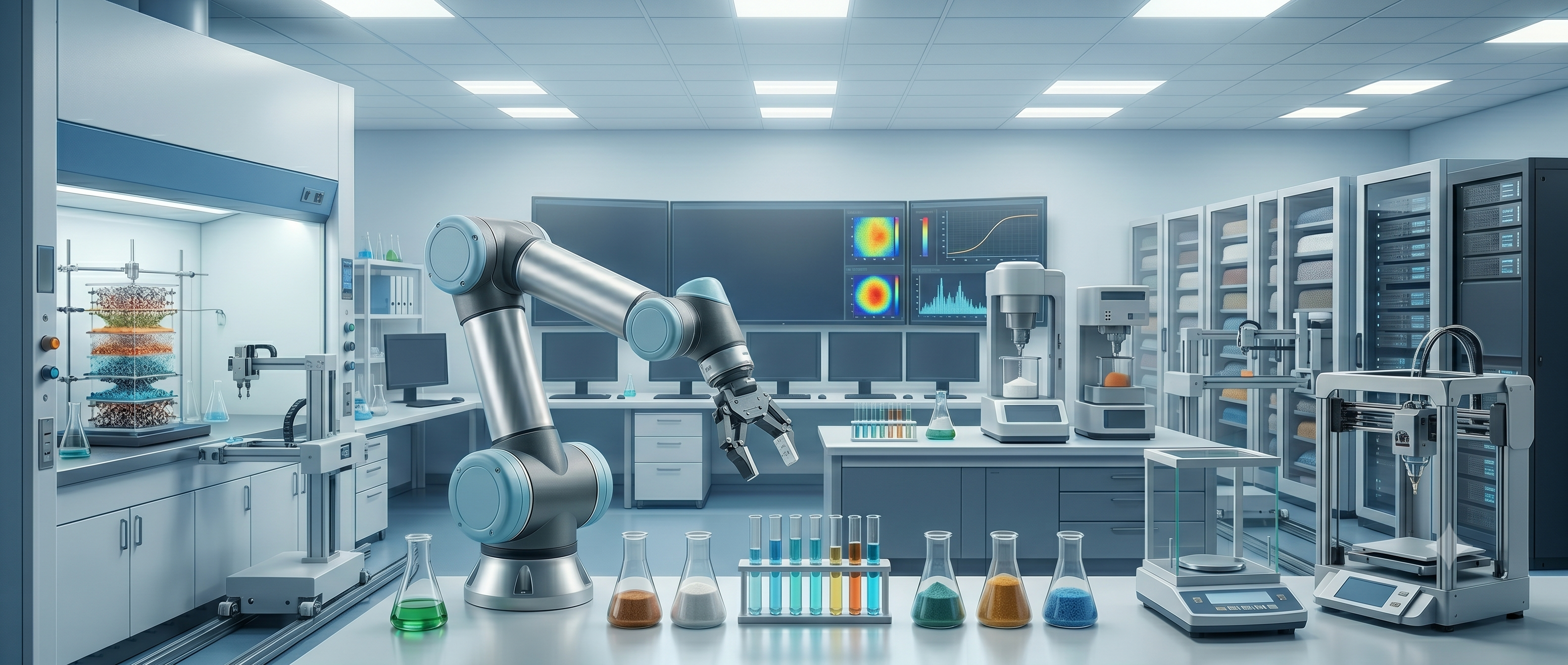
Giving AI a body
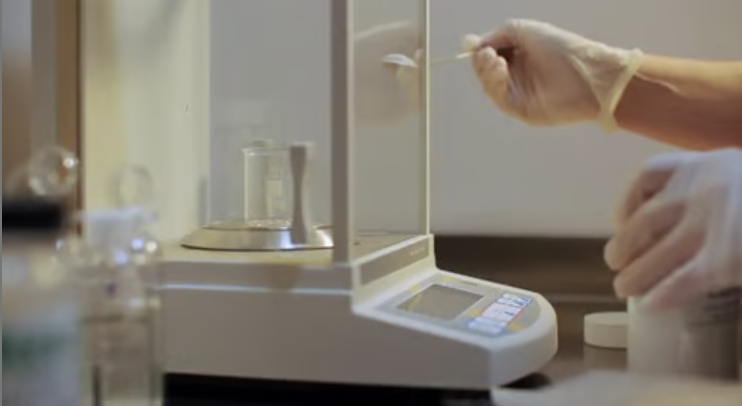
Most of the excitement around AI lives on a screen: chatbots, image generators, code assistants. But a lot of the work that actually moves science forward happens with hands — weighing reagents, transferring powders, setting up reactions. Drug discovery and materials discovery both depend on thousands of these small physical operations.
The dream behind robotics foundation models is simple to state and hard to deliver: give AI access to the physical world so it can do this work itself. For our final project, we wanted to test how close that dream is for a task that sounds trivial but is notoriously hard to automate — measuring out a small, precise amount of fine powder.
Why lab robots haven't taken over yet
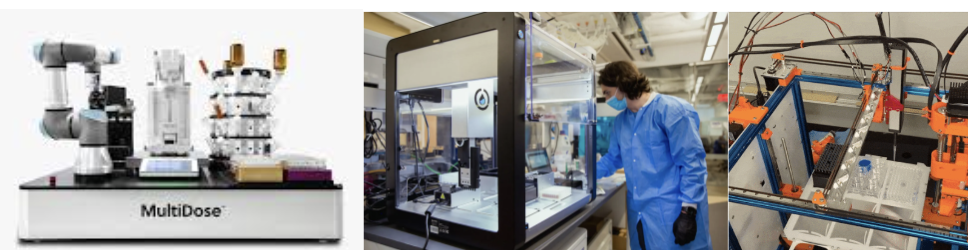
Lab automation isn't new. Walk into a well-funded lab and you'll find robotic arms pipetting samples all day. But today's systems share a set of limitations:
- They're pre-programmed for fixed tasks in fixed environments, so they don't generalize to anything new.
- They're usually contained systems — the workspace is defined by the machine's own footprint and is hard to expand.
- They mostly handle liquids, not solids.
- They tend to be proprietary and expensive, and they often force you to redesign your entire workflow around specialized (or vendor-locked) tools.
In other words, the robot bends the lab to fit the machine, not the other way around. We wanted to flip that.
A different kind of autonomy
The shift we're interested in moves away from custom-built robots that need expert pre-programming for domain-specific tasks, and toward general-purpose robot hardware driven by robotics foundation models — large multimodal models that take in vision, language, and robot state, reason about the scene, and output actions. The promise is general-purpose behavior in messy, unstructured environments, without writing a new program for every task.
The model we built on is MolmoAct2[1], an open-science robotics foundation model from Ai2. A few things make it a strong starting point:
- It's fully open — models, code, data, and evaluation are all released.
- It was trained on roughly 720 hours of high-quality real-world robot data (compared to about 22 hours for the original MolmoAct), plus over a thousand community datasets scraped and filtered from Hugging Face.
- It's an action reasoning model: rather than mapping pixels straight to motor commands, it reasons about the scene and even predicts depth before acting, which helps it adapt to tasks and robot bodies it hasn't seen before.
People had already shown MolmoAct2 working out-of-the-box on unseen objects and environments. Our question was narrower and more demanding: could it learn a high-precision lab skill?
The task: dosing powder for sustainable materials
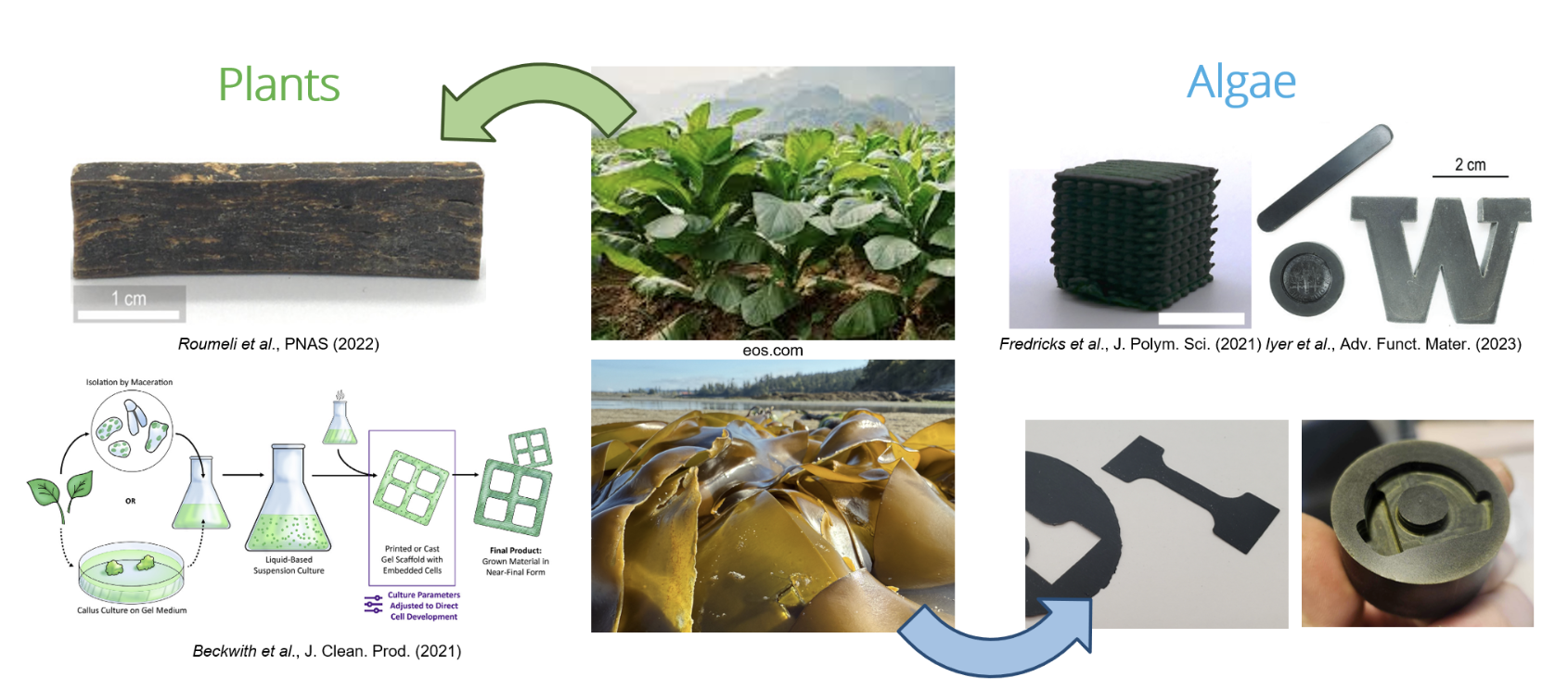
Our application comes from algae- and biomass-based sustainable materials research, where solid powders are a routine ingredient. Solid powder dosing shows up across many research domains and is one of the hardest things to automate, because powder behaves unpredictably: it clumps, it scatters, it sticks.
Our goal was deliberately practical: automate powder dosing inside an existing lab, using existing workflows, without significantly altering either one. No custom dispenser hardware, no special digital scale, no redesigned molds — just a general robot learning to do what a person does.
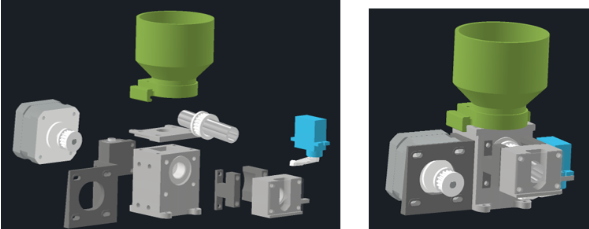
For reference, the "state-of-the-art" automated approach uses a dedicated motion platform[2] with a custom powder dispenser, special molds, and a scale wired for digital communication. It's reliable and accurate, but it relies on a fundamentally different mechanism than a human and a fully custom workflow. We intentionally did not use it.
Benchmarking models against the human baseline
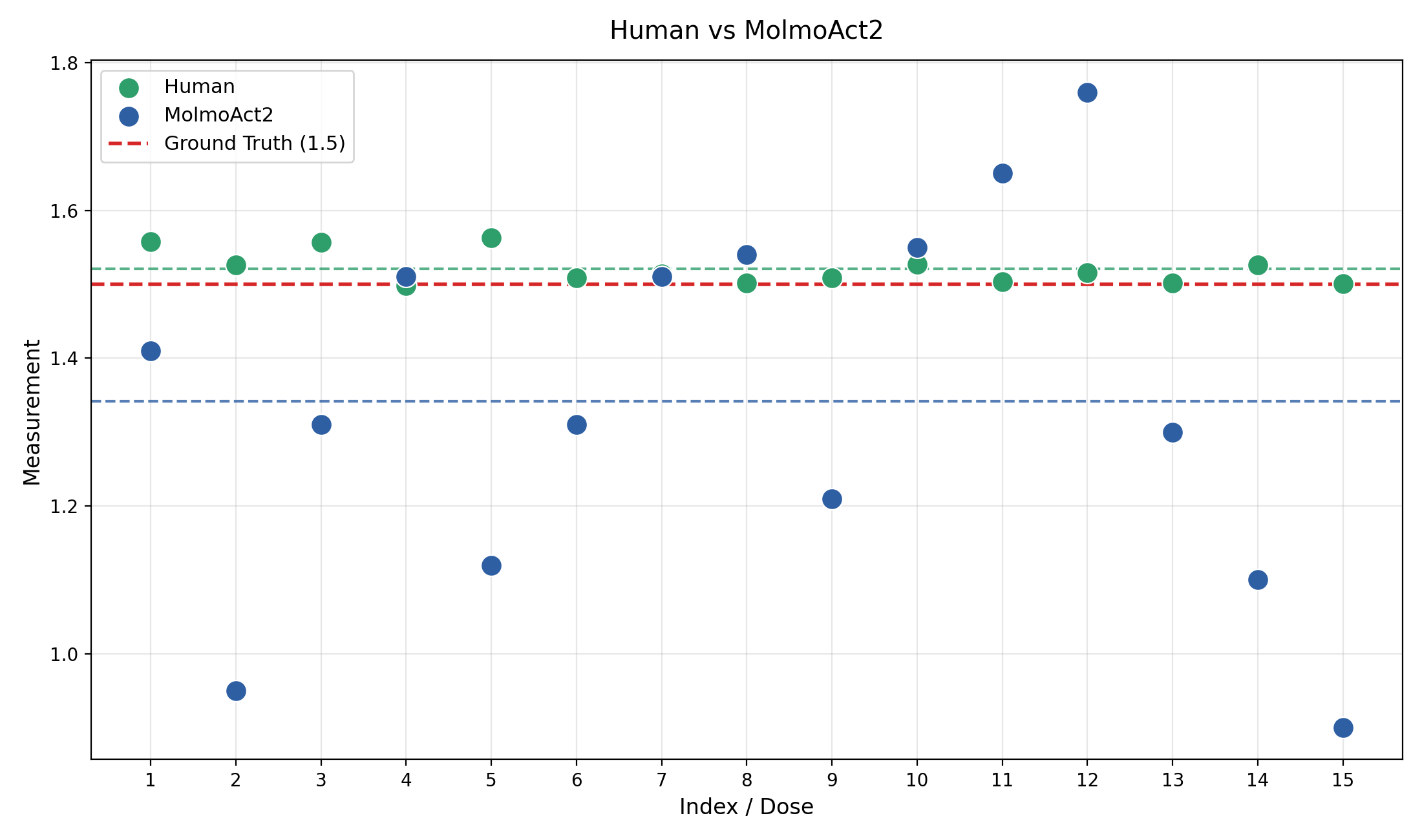
We collected a human baseline first: an operator measured a 1.5 g target across 15 trials, with no removing or re-attempting. The results landed in a tight band, mostly within a few hundredths of a gram of target — a reminder of how good trained humans are at this. That band is the bar each model has to clear.
To keep the comparison fair, every model ran through the same protocol:
- Collected 50 demonstrations of measuring 1.5 g of powder.
- LoRA fine-tuned the model for 100k steps.
- Evaluated on 15 trials, mirroring the human protocol.
Results: MolmoAct2
The model did learn the task. Some trials were excellent — one hit 1.51 g, essentially on target. But the spread was much wider than the human baseline, ranging from about 0.96 g on a light pour to 1.76 g on a heavy one.
The robot could clearly do the motion; what it lacked was the consistent fine control that keeps every trial close to target.
What we learned (and what's still hard)
The honest takeaway is encouraging but sober: a general, open robotics foundation model can be fine-tuned to attempt a delicate lab task with only 50 demonstrations and no custom hardware — but it doesn't yet match a trained human's precision. The gap is mostly about variance, and that variance traces back to a few real bottlenecks:
- Training data is hard to generate. You first have to perform the motion under human teleoperation, which is itself very difficult for fine-motor tasks.
- There's no good end effector. A one-DOF gripper simply can't reproduce the finger-tapping subtlety that makes human dosing precise.
- Fine motor movement is hard to imitate without either better hardware or far more training data.
- Language and vision models struggle with exact joint movements. A VLM can interpret what a human is doing, but translating that into the precise joint trajectories behind each motion is still an open problem — an area that recent work on imitating human motion via analogical reasoning is starting to tackle.
References
- Fang, Haoquan, Jiafei Duan, Donovan Clay, Sam Wang, Shuo Liu, Weikai Huang, Xiang Fan et al. MolmoAct2: Action Reasoning Models for Real-world Deployment. arXiv preprint arXiv:2605.02881 (2026). arxiv.org/abs/2605.02881
- Machine Agency, Science Jubilee: Building a Jubilee. science-jubilee.readthedocs.io